Sentimental items are often the most challenging to declutter. That ticket stub from your first concert, your grandmother’s china set you never use, the stack of birthday cards from years past, each piece carries emotional weight that makes letting feel impossible.
But keeping everything isn’t the answer. When sentimental clutter overwhelms your space, it can diminish the meaning of truly precious items.
The key is learning to honor memories while creating room for your present life to breathe.
Start with the Right Mindset
Decluttering sentimental items isn’t about erasing your past or becoming emotionally detached. It’s about curating what deserves space in your life today.
Think of yourself as a museum curator, you’re selecting the most meaningful pieces for display, not discarding your history.
The goal isn’t to keep anything. It’s to keep what genuinely matters.
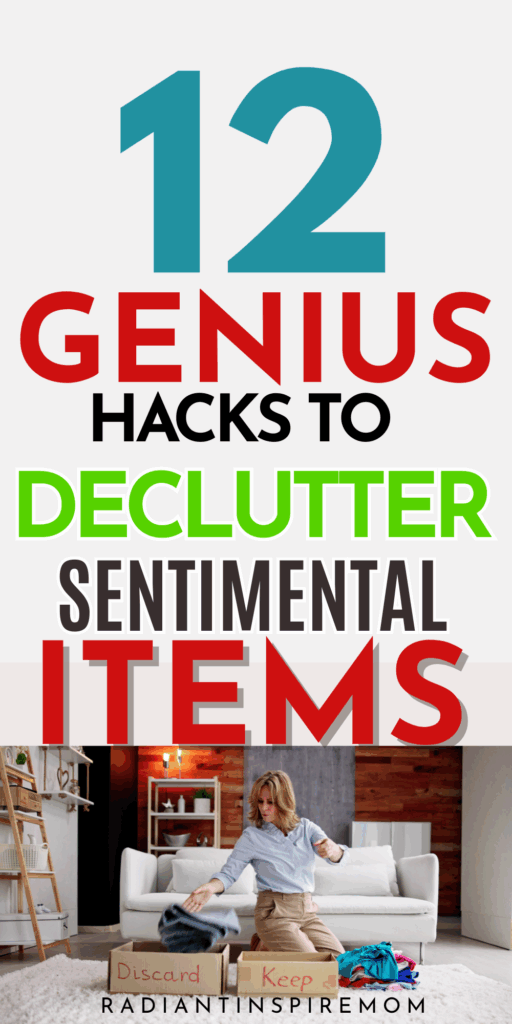
The Three-Box Method
Sort your sentimental items into three categories:
Keep: Items that bring you genuine joy when you see them and have a clear place in your current life. These might include a piece of jewelry you wear, photos you love looking at, or objects that spark positive memories without overwhelming guilt.
Maybe: Items you’re unsure about. These need deeper consideration. Store them for six months. If you don’t think about them during that time, they’re probably safe to let go.
Release: Items you’re keeping only out of obligation or guilt. This includes gifts you never liked, duplicates of the same memory, or things so damaged they’ve lost their beauty.
Ask Better Questions
Instead of “Should I keep this?” try these:
- Does this item represent a memory I actually want to revisit?
- Would I miss this if it were gone?
- Am I keeping this for me or because I think I should?
- Does this object enhance my life or just take up space?
Be honest. Sometimes we hold onto things not because they’re meaningful, but because letting go feels like admitting something we don’t want to face.
Start Small
The biggest mistake people make when decluttering sentimental items is starting with the most emotionally charged items, such as a loved one’s belongings or childhood keepsakes.
That almost always leads to overwhelm or decision paralysis. Instead, ease into the process.
Start with things that carry light or vague emotional weight, such as old birthday cards from acquaintances, blurry vacation photos, or childhood crafts that no longer reflect your current style.
These are lower-stakes items and offer a great way to practice letting go. As you work through them, you begin to build emotional resilience and sharpen your ability to distinguish between memory and material.
Once you become comfortable making decisions with smaller items, you’ll feel more prepared to tackle the more significant matters.
Decluttering is a skill. Like any skill, it becomes easier with practice, and starting small is a great way to build momentum without burning out emotionally.
Practical Strategies That Work
1. Take photos before letting go
Capture items that hold memories but don’t need physical space in your life.
Create a digital album with context—write a short story about each photo explaining why the item mattered. This preserves the memory while freeing up physical space.
Some people find scanning documents and cards works better than photos for paper items.
2. Set specific limits and stick to them
Choose one shoebox per decade of your life, or one bin per family member. When containers are full, something has to be removed before anything new can be added.
This forces you to prioritize and prevents accumulation from creeping back, label containers with dates to track what you’re keeping from each period.
3. Transform items into something you’ll use
Turn your grandmother’s vintage scarves into framed wall art. Have old t-shirts made into a quilt you’ll sleep under. Convert children’s artwork into a coffee table book.
Repurpose jewelry into new pieces that match your current style.
The key is creating something functional or beautiful that fits your life now, not storing the original forever.
4. Share strategically, don’t just offload
Before giving items to family, ask what they want. Your sister might prefer one meaningful piece of mom’s jewelry over boxes of everything.
Consider donating items to places where they’ll be appreciated, vintage clothes to costume theaters, books to libraries, musical instruments to schools.
This way, items continue serving a purpose rather than becoming someone else’s storage problem.
5. Use the “one-year rule” for borderline items
Box up items you’re unsure about and store them for a full year. Set a calendar reminder.
If you haven’t thought about or needed anything in that box, donate it unopened. This removes the pressure of immediate decision-making while proving what you miss.
6. Create meaningful displays for keepers
Don’t hide precious items in closets. Rotate displays seasonally so everything gets appreciation. Frame important letters. Create shadow boxes for small collections.
When sentimental items are visible and incorporated into your daily life, they bring more joy than when they’re stored away.
7. Document the stories, not just the objects
Record voice memos about why items matter while you’re deciding their fate. Interview elderly relatives about family heirlooms.
Write brief histories to accompany photos.
Sometimes the story is more valuable than the physical object, and capturing those stories can make letting go of the items themselves much easier.
8. Set processing sessions with time limits
Schedule two-hour blocks for sentimental sorting, then take a break. This prevents emotional overwhelm and decision fatigue. Use a timer and take breaks every 30 minutes.
Some decisions need time to marinate—that’s fine. Come back to difficult items in your next session with a fresh perspective.
9. Create rituals for meaningful release
Write thank-you letters to items before donating them. Hold a small ceremony for significant pieces you’re letting go. Some people light candles or say prayers.
Others have “release parties” with family members, sharing memories before the items are taken away. These rituals honor the item’s significance while marking your conscious choice to let it go.
10. Don’t Declutter During Emotional Storms
Decluttering requires clarity, and emotional storms cloud judgment. Grief, anger, loneliness, or high stress make it harder to make rational decisions.
Don’t declutter sentimental items during emotionally intense periods.
If you’ve just lost a loved one, moved homes, or gone through a breakup, give yourself time to process before sorting through emotionally charged belongings.
There’s no rush. When you’re more grounded, you can make thoughtful decisions with less guilt or confusion.
If you’re feeling the urge to declutter during a tough time, focus on neutral categories, such as expired food, junk drawers, or old technology.
Leave the sentimental stuff for a time when your heart feels steady. Emotional storms pass. Your memories deserve to be handled when you’re at peace, not in pain.
11. Give Items a Grateful Send-Off
Before donating, selling, or discarding a sentimental item, pause and acknowledge what it meant to you. Say thank you, either silently or out loud. This simple act creates emotional closure.
It’s a way of validating the item’s role in your life while permitting yourself to move on.
This ritual can feel especially powerful when parting with gifts, inherited items, or anything connected to someone you loved. The truth is, letting go doesn’t mean forgetting.
It means recognizing that the item served its purpose, and now it’s time to release it with respect.
You can even write a short note or take one last photo if that helps. What matters is the mindset: appreciation instead of guilt.
A grateful send-off transforms the act of decluttering into an act of honoring, and that emotional shift makes all the difference.
12. Know That Letting Go Isn’t Erasing
One of the biggest fears people have about decluttering sentimental items is that letting go means losing the person, memory, or meaning tied to it.
But that’s simply not true. Letting go is not erasing, it’s choosing to live with intention. The memory exists within you, not the item. You don’t need a box full of things to prove that something mattered.
What you choose to keep should add to your life, not clutter it.
When you shift your thinking from loss to liberation, the process becomes lighter. You’re not dishonoring your past, you’re simply choosing to honor your present, too. Decluttering sentimental items isn’t about detachment.
It’s about creating space, for the people, memories, and energy that are still with you, right now.
When You Feel Stuck
It’s normal to feel emotional during this process. Some days will be more complex than others. Take breaks when you need them, process one category at a time rather than tackling everything at once.
Remember that memories live in you, not in objects. The love you shared with someone doesn’t disappear when you donate their old sweater.
The Freedom on the Other Side
When you finish, you’ll have space for what matters now. The items you kept will have room to be seen and appreciated. Your home will feel lighter, and your truly precious belongings will shine brighter without the distraction of forgotten clutter.
Decluttering sentimental items isn’t about having less. It’s about making space for more of what makes life meaningful today.
How to Simplify Life and Declutter the Unwanted Stuff: 18 Best Tips
27 Lazy Girl Hacks To Declutter Your House